A safe, strong deadlift starts with the bar over mid-foot, flat back, shoulders slightly ahead of the bar, hard core brace, and a straight bar path up your legs. Both conventional (feet hip-width, hands outside knees) and sumo (wide feet, hands inside knees) are legitimate — your leverages and mobility dictate which is stronger. This guide covers both, the 7 setup cues that protect your back, and the mistakes that cause most deadlift injuries.
The deadlift is the most "functional" barbell lift — it's what you do every time you pick something heavy off the ground. It also carries the highest injury risk if loaded without technique. The cues below are consistent with IPF and USPA competition technique, sports science literature on low-back mechanics, and the coaching of Greg Nuckols, Mike Tuchscherer, and Eric Helms.
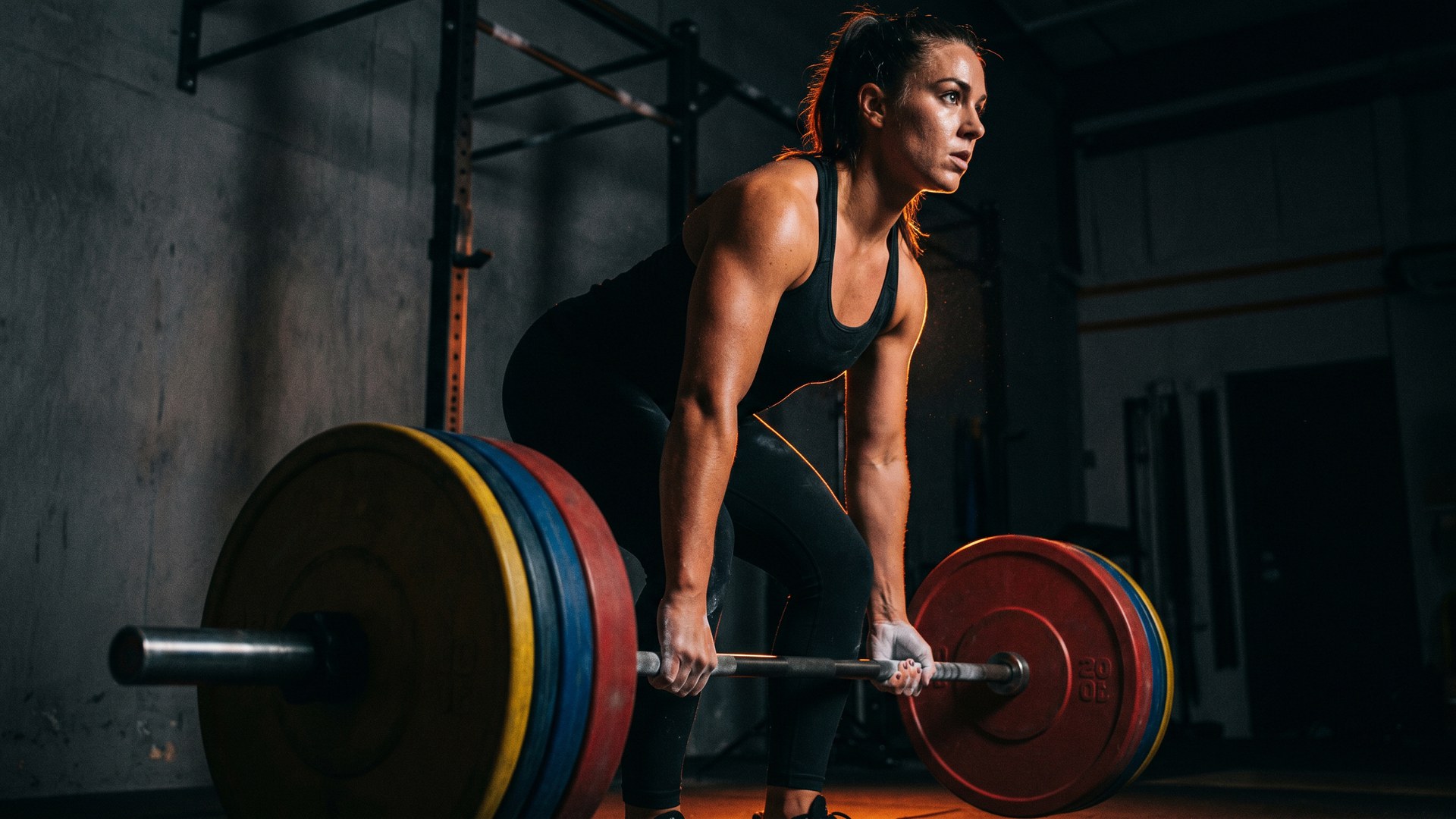
Conventional vs Sumo: Which Should You Choose?
Neither is "better" in general. Neither is cheating. Both are used in competition by record-holders. The right choice depends on your anatomy:
- Conventional suits: lifters with shorter torsos, longer arms, strong lower backs, or a preference for posterior-chain emphasis.
- Sumo suits: lifters with longer torsos, shorter arms, strong quads/hips, or a preference for a shorter bar path (~25% shorter than conventional).
The honest test: run each for 8–12 weeks with matched volume and effort, and pick whichever produces more weight with less back fatigue. Most elite powerlifters compete exclusively in one stance, not both.
The 7 Cues That Apply to Both Stances
Cue 1 — Bar Over Mid-Foot
When you approach the bar, stand so the bar crosses over the middle of your feet — roughly one inch from your shins. Do not start the bar against your shins; you need room for your hips to load.
Why: Mid-foot is your natural balance point. The barbell will travel in a straight vertical line from the starting position through lockout. Starting the bar forward of mid-foot forces the bar to swing back toward you on the pull — wasting energy and destabilizing the lift.
Cue 2 — Hinge, Then Grip
From the standing position, push your hips back and slightly bend your knees. Reach down and grip the bar. Do not squat down to the bar. The deadlift is a hinge, not a squat.
Grip options:
- Double overhand: both palms facing you. Best for teaching and lighter sets. Grip fails around 80–90% 1RM for most lifters.
- Mixed grip: one palm forward, one backward. Stronger, but creates an asymmetric pull — alternate which hand is supinated set to set.
- Hook grip: both palms facing you, thumbs trapped under fingers. Used in Olympic lifting. Strongest bare grip; painful to learn.
- Straps: for heavy volume or when grip fails before legs.
Cue 3 — Shoulders Slightly Ahead of the Bar
At the start, your shoulders should sit just in front of the bar (from a side view). Not directly over. Not behind.
Why: Shoulders ahead of the bar creates the correct angle for the lats to engage and keeps the bar tight to your body on the way up. Shoulders behind the bar means you're starting from a position your levers can't produce force from — the bar will drift forward on the pull.
Cue 4 — Flat Back, Chest Up, Lats Engaged
Your spine must stay neutral — not rounded, not hyperextended. Chest up, eyes forward or slightly down. Engage your lats by imagining you're trying to squeeze oranges in your armpits, or "bend the bar around your legs."
Why: Engaged lats keep the bar tight to your body throughout the pull. A "loose" setup lets the bar swing forward and converts the deadlift into a lower-back exercise — which is how most deadlift injuries happen.
Cue 5 — Pull Slack Out of the Bar
Before initiating the pull, apply tension — lift slightly until the bar makes contact with the plates (you'll hear a click). This removes play from the barbell and your body and ensures you start the pull with everything already loaded.
Why: A "slack pull" — yanking the bar off the floor before your body is tensioned — is the #1 cause of missed first reps and mid-rep form breakdown. Pulling slack out is a 1–2 second action that lines everything up.
Cue 6 — Drive the Floor Away
On the pull, think "push the floor away," not "pull the bar up." The leg drive starts the movement; the bar follows.
Hips and shoulders must rise at the same rate. If hips shoot up first, the bar drifts forward and you're doing a stiff-leg deadlift — your lower back takes all the load.
Keep the bar in contact with your body. It should scrape your shins, then your thighs, then lock out over your hips. Tight body = straight bar path = maximum leverage.
Cue 7 — Lock Out with Glutes, Not Lower Back
At the top: stand tall. Squeeze your glutes to drive your hips into the bar. Do not hyperextend — no leaning back, no arched lockout pose. Neutral spine, locked hips, full knee extension.
Lower the bar in the reverse pattern: push hips back first, then bend knees. Reset between reps for heavy work. Touch-and-go reps are fine for higher-rep hypertrophy work, but the bar must reset its position on the floor — no bouncing plates.
Conventional-Specific Cues
- Feet: hip-width, roughly jump-width. Toes slightly out (5–15°).
- Grip: just outside the knees.
- Torso angle: more horizontal at the start (~45° from vertical).
- Emphasis: posterior chain dominant — hamstrings, glutes, erectors, traps.
- Bar path: longer vertical travel (~25% more distance than sumo).
Sumo-Specific Cues
- Feet: wide — often plate-to-plate. Toes angled out 30–45°.
- Grip: hands inside the knees, close together.
- Torso angle: more upright at the start.
- Emphasis: quads + glutes + adductors more than erectors.
- Pre-pull: actively push knees out over toes before breaking the bar off the floor.
- Bar path: ~25% shorter than conventional — mechanical advantage for many lifters.
The 5 Most Common Deadlift Mistakes
- Rounded lower back under load. Fix: reduce weight, film from the side, rebuild with strict neutral spine.
- Hips rising before the bar breaks the floor. Fix: "push floor away" cue; ensure shoulders aren't behind the bar at start.
- Bar drifts forward off the shins. Fix: engage lats harder, keep elbows locked, think "bar tight to body."
- Hyperextended lockout. Fix: squeeze glutes and stop. No lean-back showboating.
- Bouncing plates on the floor. Fix: reset every rep for heavy work. Touch-and-go only for higher-rep accessory sets.
Programming the Deadlift
- Strength: 3–5 sets of 3–5 reps at 80–90% 1RM, once per week.
- Hypertrophy: 2–4 sets of 5–8 reps at 70–80% 1RM, once per week + a Romanian deadlift day.
- Beginner: 3 sets of 5 reps starting with the empty bar. Focus on form, not load, for the first 4 weeks.
Unlike squat and bench, deadlift doesn't benefit much from 2x/week direct training — it's the most CNS-intensive lift. Most lifters progress faster with 1x/week heavy deadlifts + 1x/week RDL or block pulls as accessories.
How IronStreak Supports Your Deadlift
IronStreak includes conventional deadlift, sumo deadlift, Romanian deadlift, stiff-leg deadlift, rack pull, and deficit deadlift in the free back exercise library (plus glute and leg variants). Each comes with the form cues from this article accessible mid-workout via the info button.
Every rep is logged with weight and reps; estimated 1RM charts track your progress over months. New PRs trigger trophy celebrations and add to your all-time deadlift record on the PR Board.
FAQ
What is proper deadlift form?
Bar over mid-foot, flat back, shoulders slightly ahead of the bar, chest up, lats engaged, hard core brace, hips and shoulders rising together, straight bar path up the body, glute-driven lockout without hyperextension.
Should I deadlift conventional or sumo?
Both are valid competition lifts. Conventional is hip-hinge dominant; sumo is more quad-dominant with a shorter bar path. Try each for 8–12 weeks and pick whichever moves more weight with less fatigue.
Is deadlifting bad for your back?
No — done with neutral spine and progressive loading, it strengthens the entire posterior chain and can reduce chronic low-back pain (per 2015 BJSM research). Rounded-spine deadlifting under heavy load is risky.
Should I use straps when deadlifting?
Yes for heavy volume work; no for top sets if you compete in powerlifting or want to train bare grip. Straps are a productivity tool, not a crutch.
Why does my lower back hurt after deadlifting?
Three usual causes: rounded back under load, weak core bracing, or too much volume. Reduce weight, strengthen the brace, cap hard deadlift volume at 4–8 sets per week.
How often should I deadlift?
Once per week for most lifters. Twice per week only if one session is a lighter variation (RDL, block pull, deficit). CNS recovery matters more than frequency.
Key Takeaways
- Bar over mid-foot. Flat back. Shoulders slightly ahead of the bar. Every rep.
- Hinge, don't squat. The deadlift is a hip hinge with knees as a secondary joint.
- Engage lats, pull slack, then drive the floor away. The bar scrapes the body on the way up.
- Lock out with glutes. Never hyperextend.
- Conventional or sumo — pick based on leverages, not trends.
- Once per week heavy. RDL or rack pulls for extra volume.